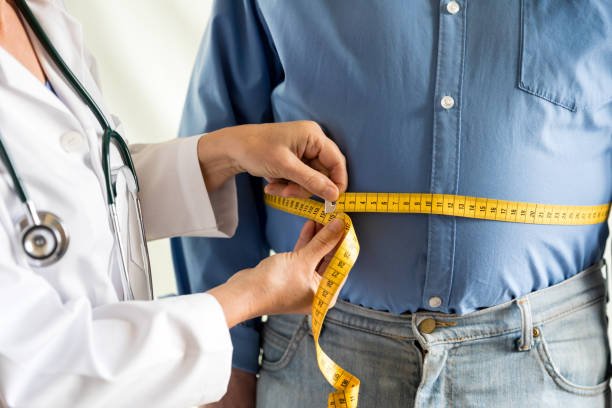
Dr. Patricia Williams, my primary care physician here in Portland, pulled up my chart at my annual physical last March and said something I had been waiting to hear for years: "I stopped using BMI last year. Now I check waist-to-height ratio and body fat percentage." I almost hugged her. After six years of watching doctors misclassify healthy athletes as overweight and miss metabolically dangerous normal-weight patients, the medical community is finally starting to abandon the old shortcut. The 2025 update from the American Association of Clinical Endocrinologists officially recommended waist-to-height ratio as a primary cardiometabolic risk screening tool, and for the first time in my career, I am seeing Portland physicians actually measure waists in their exam rooms.
Waist-to-height ratio is almost embarrassingly simple. You measure your waist at the level of your navel, divide it by your height, and the resulting number tells you something about your visceral fat and metabolic risk that BMI cannot even approach. A ratio below 0.5 is generally considered low risk. A ratio above 0.5 indicates elevated visceral fat and increased risk of cardiovascular disease, type 2 diabetes, and metabolic syndrome. It takes thirty seconds, costs nothing, and requires no equipment beyond a tape measure. And yet it is more predictive of mortality than BMI in nearly every population studied.
The reason is visceral fat. BMI measures mass relative to height. It does not distinguish between muscle and fat, and it does not distinguish between subcutaneous fat under your skin and visceral fat around your organs. Visceral fat is the dangerous stuff. It secretes inflammatory cytokines, promotes insulin resistance, and drives cardiovascular disease. A person can have a "healthy" BMI of 22 and a waist-to-height ratio of 0.58, meaning they have significant visceral fat accumulation and elevated metabolic risk despite their normal weight. I have tested these people at our Portland studio. Their DEXA scans confirm it. Their blood work confirms it. Their BMI says they are fine. Their waist says otherwise.
📊
BMI vs Body Fat Analyzer
Compare BMI and body fat percentage side by side. Detect BMI false positives for athletes and flag normal weight obesity. Free. Private.
All data stays in your browser — we never see it.
Here is how waist-to-height ratio compares to BMI and body fat percentage for metabolic risk prediction:
| Metric | What It Measures | Metabolic Risk Prediction | Ease of Use |
|---|
| BMI | Mass/height² | Weak (misses normal weight obese) | Very easy |
| Waist circumference | Abdominal girth | Moderate (correlates with visceral fat) | Easy |
| Waist-to-height ratio | Waist/height | Strong (accounts for body size) | Very easy |
| Body fat percentage | Fat mass/total mass | Moderate-Strong | Requires equipment |
| Visceral fat area (DEXA) | Intra-abdominal fat | Very strong | Requires DEXA |
The research on waist-to-height ratio is remarkably consistent. A 2014 meta-analysis by Ashwell et al. pooled data from over three hundred thousand adults across multiple ethnic groups and found that waist-to-height ratio was a better predictor of cardiometabolic risk than BMI in every population studied. A 2020 study by Browning et al. showed that a waist-to-height ratio above 0.5 was associated with a 2.3-fold increase in cardiovascular mortality compared to a ratio below 0.5, independent of BMI. The metric works because it captures the one thing that matters most: whether your abdominal fat is accumulating faster than your body can handle.
📊
Body Fat Percentage Estimator
Estimate your body fat percentage using the Navy method, YMCA method, or 3-site/7-site skinfold Jackson-Pollock equations. Free. Private. No data leaves your browser.
All data stays in your browser — we never see it.
But waist-to-height ratio is not perfect, and I want to be honest about its limitations. It does not distinguish between visceral and subcutaneous abdominal fat. A person with a thick waist from well-developed obliques and rectus abdominis — a powerlifter or strongman, for example — might have a ratio above 0.5 without significant visceral fat. The metric also does not work well for children, whose body proportions change rapidly with growth, or for adults under five feet tall, where the ratio can be skewed by short stature. And it tells you nothing about your overall body fat percentage, your lean mass, or your bone density. It is a screening tool, not a diagnostic.
That is where body fat percentage comes in. Waist-to-height ratio flags risk. Body fat percentage quantifies it. A DEXA scan that shows a waist-to-height ratio above 0.5 combined with a visceral fat area in the top quartile and a body fat percentage of 35% is a very different picture from a waist-to-height ratio above 0.5 with low visceral fat, high lean mass, and a body fat percentage of 18%. The first person needs intervention. The second person is probably an athlete with a muscular waist. The ratio alone cannot tell the difference. The composition data can.
📊
Lean Body Mass Calculator
Calculate lean body mass from weight and body fat percentage. Includes bone mass estimate, organ mass reference ranges, and residual mass breakdown.
All data stays in your browser — we never see it.
I am encouraged by what I am seeing in Portland. Dr. Williams is not alone. Several clinics in the area have started measuring waists routinely. The Oregon Health & Science University medical school now teaches waist-to-height ratio as part of its preventive medicine curriculum. The Portland Parks & Recreation fitness screening program I wrote about recently includes waist measurement alongside BIA testing. The shift is slow, but it is real. After decades of BMI dominance, the medical community is finally acknowledging that a number derived from height and weight alone is not enough to assess metabolic health.
For individuals, the practical application is simple. Measure your waist at the navel, standing relaxed, after a normal exhale. Do not suck in. Measure your height barefoot. Divide waist by height. If the result is below 0.5, you are in a low-risk zone. If it is between 0.5 and 0.6, you have moderate risk and should consider lifestyle changes. If it is above 0.6, you have elevated risk and should see a healthcare provider for further assessment. Do this monthly, at the same time of day, under the same conditions. Track the trend. A rising ratio is a warning sign even if your weight is stable.
What is a healthy waist-to-height ratio?
Below 0.5 is considered low risk for cardiometabolic disease. Between 0.5 and 0.6 indicates moderate risk. Above 0.6 indicates elevated risk. These thresholds apply to most adults regardless of BMI.
Why is waist-to-height ratio better than BMI?
Because it accounts for body size while directly measuring abdominal fat, which correlates strongly with visceral fat and metabolic risk. BMI misses normal weight obesity and misclassifies muscular individuals as overweight.
Can I have a healthy BMI but an unhealthy waist-to-height ratio?
Yes. This is called normal weight obesity, and it affects roughly 30% of adults with normal BMI. These individuals have elevated body fat percentage and visceral fat despite their normal weight, putting them at metabolic risk that BMI screening completely misses.
Where exactly should I measure my waist?
At the level of your navel, standing relaxed, after a normal exhale. Use a flexible tape measure, keep it horizontal, and do not suck in your stomach. Measure at the same time of day for consistency.
Should I use waist-to-height ratio or body fat percentage for health tracking?
Both. Waist-to-height ratio is a free, fast screening tool for metabolic risk. Body fat percentage, especially from DEXA, provides deeper insight into your composition. Use waist-to-height ratio monthly for screening and body fat percentage every six to twelve months for detailed assessment.
Dr. Williams told me she switched to waist-to-height ratio because she was tired of telling patients their BMI was fine while their blood work told a different story. She was tired of the disconnect between the number on the chart and the reality in the body. She wanted a metric that actually correlated with the health outcomes she was trying to prevent. She found it in a tape measure and a calculator.
The old shortcut is dying. The new metrics are simpler, more honest, and more useful. Your waist divided by your height is not a perfect measure. But it is a hell of a lot better than a number that ignores your waist entirely.
— Emily Clarke, Exercise Physiologist, Portland, Oregon