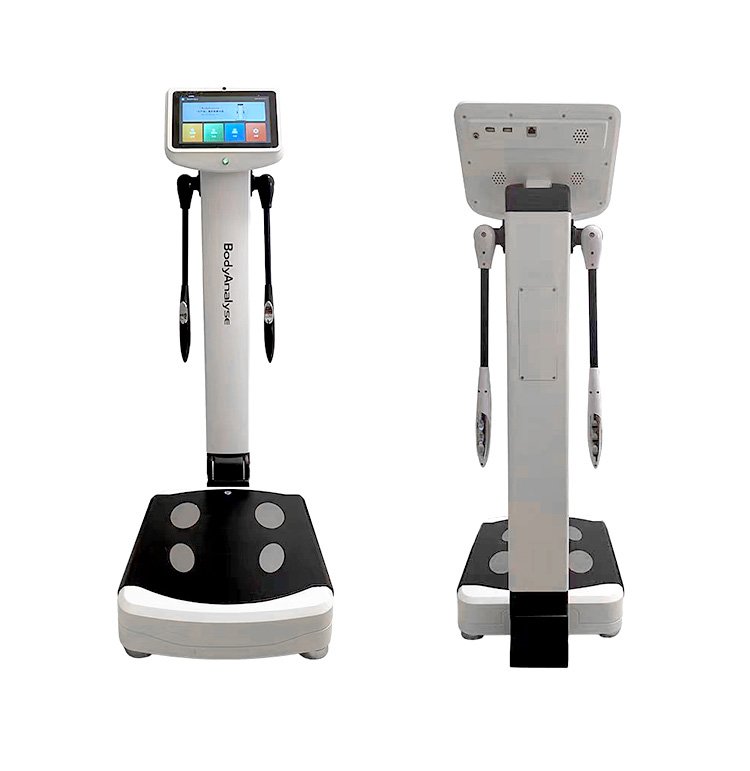
I stepped onto the body composition analyzer at my old gym on Burnside last Tuesday, mostly out of boredom while waiting for Alex to finish their deadlift session. The machine beeped, flashed a cheerful animation, and announced I was 31.2% body fat. I stared at the number, blinked, and stepped off. Then I stepped back on. 28.7%. Off. On again. 33.4%. Three readings in ninety seconds, spread across nearly five percentage points, and I am supposed to be the professional in this room.
That machine cost the gym roughly eight thousand dollars. It had a touchscreen, a branded app, and a sticker claiming "medical-grade accuracy." I have performed over three thousand body composition assessments in my career, and I can tell you with absolute certainty that most gym BIA devices are producing numbers that are, at best, educated guesses and, at worst, actively misleading. The gap between what those machines promise and what they actually deliver is the dirty secret of the fitness industry, and after four years running the testing program at a high-end Portland studio, I have watched too many people make major life decisions based on garbage data.
Bioelectrical impedance analysis — BIA for short — is the technology inside nearly every consumer scale and most gym body fat machines. It works by sending a tiny electrical current through your body and measuring how much resistance that current encounters. Fat tissue resists electricity more than muscle or water, so the device uses the resistance value to estimate your body fat percentage. The theory is sound. The execution, in most real-world settings, is a mess.
The problem starts with hydration. BIA is exquisitely sensitive to water content in your body. Drink a large glass of water before your test and your body fat reading can drop by two to three percentage points. Exercise beforehand and sweat out some fluid, and your reading spikes upward. Eat a salty meal the night before and retain water, and the machine interprets that extra fluid as lean mass, artificially lowering your body fat percentage. I once watched a member at our studio chug a liter of water, wait fifteen minutes, and test again. Her body fat percentage dropped from 29% to 24% — a five-point swing from nothing more than a water bottle.
📊
Bioelectrical Impedance Guide
Understand how BIA works, what affects accuracy, and how to get the most consistent readings. Hydration, electrode placement, consumer vs professional devices.
All data stays in your browser — we never see it.
Electrode placement matters enormously, and most gym machines get this wrong. Professional BIA devices use four or eight electrodes placed at precise anatomical landmarks — the wrist, the ankle, specific points on the hand and foot. Consumer scales and many gym machines use only two electrodes on the feet, sending current up one leg and down the other. The current never passes through your torso in any meaningful way, which means these devices are essentially guessing at your upper body composition based on your legs alone. For anyone with a different fat distribution between upper and lower body — which is basically everyone — the error is built into the design.
The algorithm inside the machine is another black box. Every BIA device uses a population-specific prediction equation to convert electrical resistance into a body fat percentage. The original equations were developed on specific groups — often young, white, male college students — and they do not translate cleanly to women, older adults, athletes, or people from different ethnic backgrounds. A 2016 validation study by Ling et al. tested eight popular consumer BIA devices against underwater weighing and found errors ranging from ±3.5% to ±8.2% depending on the device and the population. That is not a small margin. That is the difference between "athlete" and "overweight" on most body fat charts.
Temperature matters too, and nobody talks about this. Cold feet increase electrical resistance. Warm feet decrease it. I have seen members get different readings on the same scale in January versus July simply because the gym floor was colder in winter. The machine does not know the temperature of your feet. It just sees the resistance number and spits out a body fat percentage. Your numbers are not just fluctuating because of your diet or your training. They are fluctuating because of the thermostat.
📊
Body Fat Percentage Estimator
Estimate your body fat percentage using the Navy method, YMCA method, or 3-site/7-site skinfold Jackson-Pollock equations. Free. Private. No data leaves your browser.
All data stays in your browser — we never see it.
So what should you actually trust? The hierarchy of body fat measurement accuracy is well established in the research literature, and it does not look like what the marketing departments want you to believe. At the top sits DEXA, the dual-energy X-ray absorptiometry scan, with an error margin of roughly ±1% to ±2% when performed under standardized conditions. Next comes the Bod Pod, air displacement plethysmography, at about ±2% to ±3%. Underwater weighing, the old gold standard, sits around ±2% to ±4% depending on residual lung volume estimation. Skinfold calipers, when used by a trained technician following a standardized protocol like the 7-site Jackson-Pollock method, can achieve ±3% to ±4% accuracy. Consumer BIA scales and most gym machines? ±4% to ±8%, and that is on a good day with perfect hydration and room temperature.
Here is the accuracy ranking in a simple table:
| Method | Typical Error (±) | Cost per Test | Best For |
|---|
| DEXA Scan | 1-2% | $50-$150 | Baseline + bone density |
| Bod Pod | 2-3% | $40-$100 | Quick, non-invasive |
| Underwater Weighing | 2-4% | $30-$75 | Research settings |
| 7-Site Skinfold | 3-4% | $15-$40 | Tracking trends over time |
| Consumer BIA Scale | 4-8% | $30-$200 (device) | Daily trend tracking only |
| Gym BIA Machine | 4-8% | Usually free with membership | Entertainment, not data |
I am not saying gym BIA machines are worthless. I am saying they are useful for exactly one thing: tracking your own trend over time, under identical conditions, with the understanding that the absolute number is probably wrong. If you test every Monday morning, fasted, after using the bathroom, before coffee, at the same room temperature, the machine can show you whether your body fat percentage is trending up or down. The direction matters. The exact percentage does not. Treat it like a bathroom scale that happens to guess at body fat — useful for relative change, useless for absolute truth.
The real danger is when people compare their gym BIA number to a DEXA number they got at a clinic, or to the body fat percentage their trainer calculated with calipers, or to the number their friend got on a different machine. Those numbers are not comparable. They were generated by different technologies, different equations, different assumptions about your body. It is like comparing your speedometer reading to your GPS speed to your radar gun speed and wondering why they are different. They measure different things in different ways.
📊
BMI vs Body Fat Analyzer
Compare BMI and body fat percentage side by side. Detect BMI false positives for athletes and flag normal weight obesity. Free. Private.
All data stays in your browser — we never see it.
At our Portland studio, we used DEXA as the reference standard and compared every other method against it. The gym BIA machine we had on the floor — a popular model from a major fitness equipment manufacturer — consistently underestimated body fat by 4.2% on average compared to DEXA. It was not random error. It was systematic bias. Every single person who used that machine walked away thinking they were leaner than they actually were. The gym loved it because members felt good about their progress. I hated it because it was lying to people.
If you want real numbers, save up for a DEXA scan every six to twelve months. In Portland, you can find them at several sports medicine clinics and university research labs for between fifty and one hundred fifty dollars. Use that as your anchor. Track trends at home with a cheap BIA scale or even just a tape measure and a mirror. Your waist circumference, measured at the navel, correlates strongly with visceral fat and metabolic risk, and a tape measure costs three dollars and never needs batteries.
The fitness industry has sold us a fantasy of precision. Smart scales that sync to apps. Gym machines that print color reports. Devices that claim to measure visceral fat, muscle quality, and metabolic age. Most of it is well-supported marketing wrapped around shaky science. Your body is not a spreadsheet. Your body fat percentage is not a single number that exists in the universe waiting to be discovered. It is an estimate, and the quality of that estimate depends entirely on the method you choose and the conditions under which you test.
Why does my gym's body fat machine give different readings every time?
Because BIA is extremely sensitive to hydration, temperature, and electrode contact. Even small changes in water intake, sweat, or foot temperature can shift the electrical resistance reading by enough to change your body fat percentage by several points. Consistency in testing conditions matters far more than the device itself.
Is a DEXA scan worth the cost compared to a gym BIA test?
For absolute accuracy and a true baseline, yes. DEXA has an error margin of roughly ±1% to ±2%, while gym BIA machines typically range from ±4% to ±8%. If you are making major decisions about training, nutrition, or health based on your body fat percentage, the extra precision of DEXA is worth the fifty to one hundred fifty dollar investment.
Can I use my home BIA scale to track progress?
Yes, but only for trend tracking under identical conditions. Test at the same time of day, in the same hydration state, at the same room temperature, and look at the direction of change over weeks and months, not the absolute number on any single day.
What is the most accurate body fat test I can get in Portland?
DEXA scans are available at several sports medicine clinics and research facilities in the Portland area. Expect to pay between fifty and one hundred fifty dollars. The Oregon Health & Science University and private sports medicine clinics both offer DEXA testing with standardized protocols.
Why do different body fat methods give me completely different numbers?
Because each method measures a different proxy for body fat and uses different mathematical models to convert that proxy into a percentage. BIA measures electrical resistance. DEXA measures X-ray attenuation. Skinfold measures subcutaneous fat thickness. They are estimating the same underlying reality through different windows, and each window has its own distortion.
I left the testing program at that studio because I got tired of watching people cry over numbers that were wrong. I built BodyCompCheck because I believe everyone deserves to understand what their numbers actually mean — not what a machine wants them to believe. The old shortcut of BMI failed us. The new shortcut of consumer BIA is failing us too. The only way forward is knowledge, and knowledge starts with knowing the limits of your tools.
— Emily Clarke, Exercise Physiologist & Former Fitness Studio Body-Testing Lead, Portland, Oregon