Title: The Body Fat Test I Do Every Morning (And Why You Probably Shouldn't) Slug: dexa-scan-morning-routine-portland Date: 2026-08-01 Domain: bodycompcheck.com
The Body Fat Test I Do Every Morning (And Why You Probably Shouldn't)
Emily Clarke
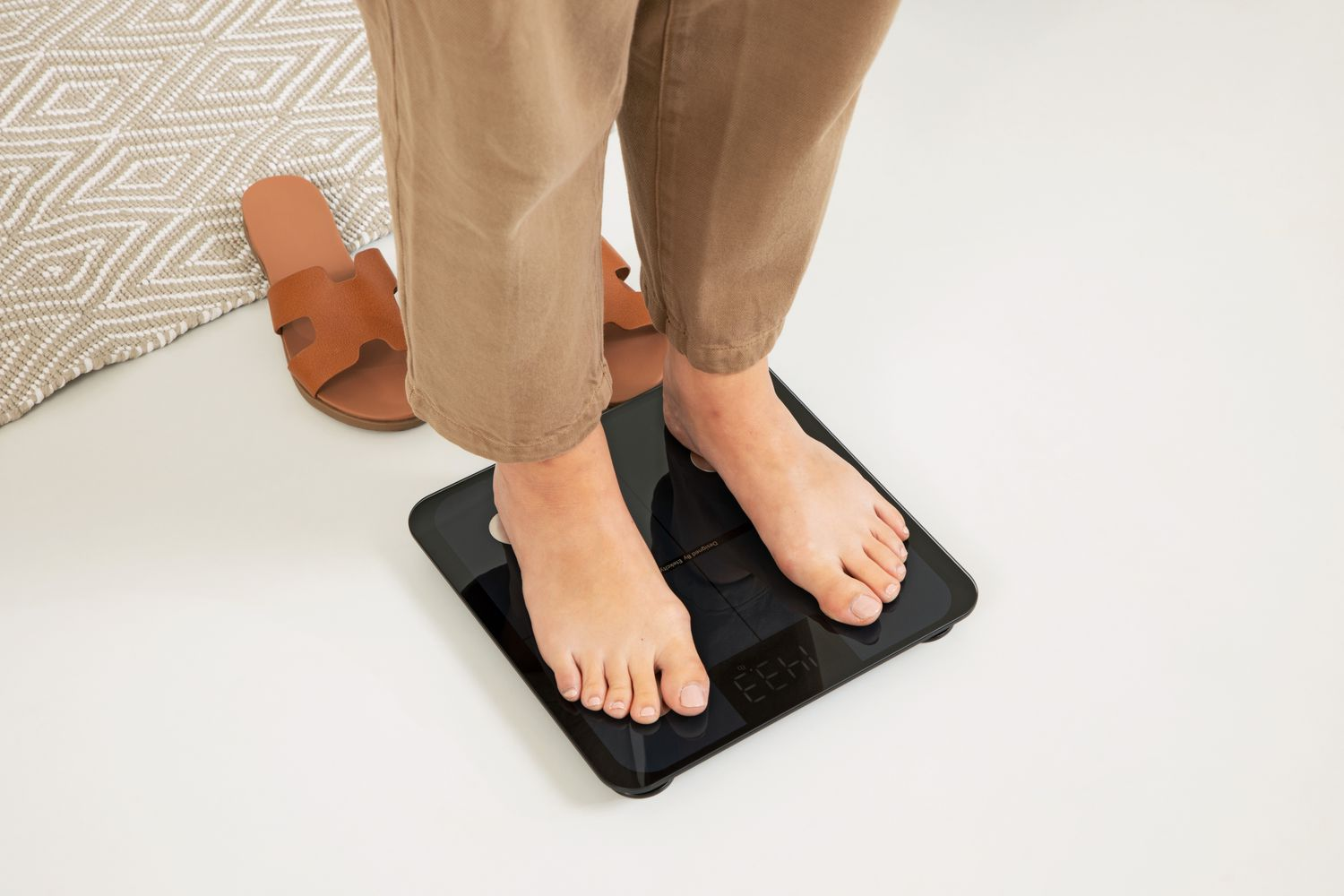
Every morning at 6:47 AM, after I finish my yoga flow and before I feed DEXA — my cat, named after the imaging technology, because I am exactly that person — I step on my bathroom scale. Not a regular scale. A bioelectrical impedance scale. The kind that sends a tiny electrical current through my feet and estimates my body fat percentage in 12 seconds. I have been doing this for four years. Four years of daily data points. Four years of watching the number fluctuate between 19.2% and 22.8% and wondering what I actually know about my own body.
Here is the thing. I am a certified exercise physiologist. I have access to a DEXA scanner at the university where I teach. I know that BIA — bioelectrical impedance analysis — has a margin of error of 3-5% compared to DEXA, which is the gold standard. I know that hydration status, meal timing, menstrual cycle phase, and whether I did yoga before weighing all affect the reading. I know all of this. And I still step on that scale every morning like it is a ritual I cannot break.
The scale told me I was 21.4% body fat last Tuesday. On Wednesday, after a particularly humid Portland night, it told me I was 23.1%. I did not gain 1.7% body fat in 24 hours. I lost water. My extracellular fluid dropped because I slept with the window open and the dry air pulled moisture from my skin. The electrical current met more resistance. The algorithm interpreted that resistance as more fat. It was wrong. I knew it was wrong. And I still spent Wednesday morning feeling slightly worse about myself than Tuesday morning.
That is the problem with daily testing. Not the data. The emotional weight of the data. When you measure something every day, you stop seeing it as information and start seeing it as a score. A score you are either winning or losing. And body composition is not a game. It is a slow, messy, non-linear process that does not care about your morning ritual.
I ran an experiment on myself last year. For 90 days, I weighed and BIA-tested every morning. I also got a DEXA scan at day 1, day 45, and day 90. The BIA scale showed a 4.3% swing over the 90 days. The DEXA showed a 1.8% swing. The BIA was capturing noise — water, sodium, sleep quality, phase of my cycle — and presenting it as signal. I was reacting to noise. I was adjusting my calories based on noise. I was letting a $60 bathroom scale dictate my self-worth based on whether I had eaten sushi the night before.
The Skinfold Tracker gave me a better option. Not daily. Weekly. Same time, same conditions, same caliper sites. The triceps, the suprailiac, the thigh. Three sites, 15 seconds, done. The weekly average was far more stable than the daily BIA. It correlated better with the DEXA. And — this is the part that matters — it did not ruin my morning when the number was "wrong." Because I was only looking once a week, I had emotional distance. I could see the trend instead of the tremor.
The Lean Mass Calculator helped me reframe what I was actually trying to measure. I do not care about body fat percentage in isolation. I care about lean mass. I care about whether my muscles are growing, maintaining, or shrinking. And lean mass changes even more slowly than body fat. A weekly DEXA would be overkill. A daily BIA is absurd. A monthly check-in with calipers and a quarterly DEXA? That is reasonable. That is sustainable. That is information I can actually use.
I am not telling you to throw away your scale. I am telling you to stop asking it questions it cannot answer. A BIA scale cannot tell you if you gained muscle this week. It cannot tell you if you lost fat this morning. It can tell you if you are hydrated. That is about it. And if you are using it for anything more precise than "am I generally trending in the direction I want," you are extracting certainty from a device that deals in approximation.
I still step on the scale. I am not a saint. But I do not record the number every day anymore. I look at it, I note whether it is in my expected range, and I move on. I save the actual tracking for weekly calipers and quarterly DEXA scans. I save the emotional investment for my yoga practice and my teaching and DEXA the cat, who does not care what my body fat percentage is as long as her breakfast is on time.
If you are testing every day, ask yourself why. Is it for data? Or is it for control? Because body composition is not something you control on a 24-hour cycle. It is something you influence over months and years with consistent training, adequate protein, sleep, and patience. The daily test is not giving you more information. It is giving you more anxiety. And anxiety does not build muscle.
What is your real body composition? Not this morning's dehydrated guess. The actual trend, measured weekly, validated quarterly, trusted annually. Find it. Track it. And then stop letting a bathroom scale run your mood.
Frequently Asked Questions
Why does Emily still step on the BIA scale every morning?
Habit and ritual. She knows the data is noisy but has not fully broken the addiction. She now ignores the number instead of recording it.
How much did BIA swing compared to DEXA over 90 days?
BIA showed a 4.3% swing. DEXA showed only 1.8%. The extra 2.5% was noise from water, sleep, and hormonal fluctuations.
What is the best tracking frequency for body composition?
Weekly calipers or tape measurements for trend tracking. Quarterly DEXA for validation. Daily weighing is data addiction, not information.
Does the cat DEXA care about body fat percentages?
No. She only cares about breakfast being on time. Emily uses this as a reminder that some things matter more than numbers.
