I tested two women at our Portland studio last year who had identical body fat percentages. Both were five-foot-five. Both weighed one hundred forty pounds. Both were 32% body fat on DEXA. But their fat distribution could not have been more different. One — a yoga instructor named Jenna — carried her fat subcutaneously, mostly on her hips and thighs. Her visceral fat area was in the bottom quartile. Her metabolic markers were pristine. Her doctor had never expressed concern about her weight. The other — an accountant named Linda — carried her fat viscerally, concentrated in her abdomen. Her visceral fat area was in the top decile. Her fasting insulin was elevated. Her blood pressure was borderline. Her doctor had told her to lose twenty pounds. Same body fat percentage. Two completely different metabolic realities.
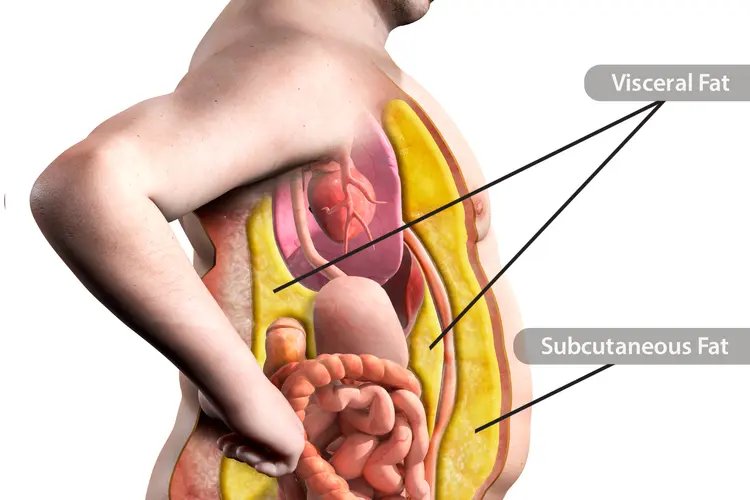
This is the central problem with every body fat measurement that does not distinguish location: fat is not fungible. Subcutaneous fat — the fat under your skin, on your hips, thighs, arms, and buttocks — is metabolically relatively inert. It stores energy, insulates your body, and produces some hormones, but it does not aggressively drive disease. Visceral fat — the fat inside your abdominal cavity, wrapped around your liver, pancreas, and intestines — is metabolically active. It secretes inflammatory cytokines like IL-6 and TNF-alpha. It promotes insulin resistance. It drives dyslipidemia. It increases cardiovascular risk independent of total body weight or total body fat percentage. Your scale cannot see the difference. Your DEXA can.
📊
Body Fat Percentage Estimator
Estimate your body fat percentage using the Navy method, YMCA method, or 3-site/7-site skinfold Jackson-Pollock equations. Free. Private. No data leaves your browser.
All data stays in your browser — we never see it.
The biology of visceral fat is fascinating and terrifying. Adipose tissue is not just a storage depot. It is an endocrine organ. Visceral adipocytes are more metabolically active than subcutaneous adipocytes. They have higher rates of lipolysis — breaking down fat for release into the bloodstream. They are more sensitive to catecholamines like adrenaline, which means they release fatty acids faster under stress. And they drain directly into the portal vein, which carries blood straight to the liver. This means the inflammatory products and free fatty acids from visceral fat hit the liver first, before the rest of the body can dilute them. The liver responds by producing more glucose, more triglycerides, and more inflammatory proteins. The metabolic cascade begins in your gut.
Subcutaneous fat does not do this. It drains into the systemic circulation, where the inflammatory products are diluted by the total blood volume before reaching vital organs. It is still fat, and excess subcutaneous fat is not harmless — it correlates with joint stress, sleep apnea, and some hormonal changes. But the metabolic risk per pound of subcutaneous fat is a fraction of the risk per pound of visceral fat.
📊
Lean Body Mass Calculator
Calculate lean body mass from weight and body fat percentage. Includes bone mass estimate, organ mass reference ranges, and residual mass breakdown.
All data stays in your browser — we never see it.
Here is what the research shows about fat distribution and risk:
| Fat Type | Location | Metabolic Activity | Health Risk | Measurement Method |
|---|
| Subcutaneous | Under skin (hips, thighs, arms) | Low | Moderate (joint, cosmetic) | Skinfold, circumference |
| Visceral | Abdominal cavity (around organs) | Very high | High (diabetes, CVD, inflammation) | DEXA, CT, MRI, waist |
| Intramuscular | Inside muscle tissue | Moderate | Moderate (insulin resistance) | Biopsy, MRI |
| Epicardial | Around heart | High | High (cardiac risk) | CT, MRI |
| Liver fat | Inside liver (hepatic steatosis) | Very high | Very high (NAFLD, diabetes) | CT, MRI, biopsy |
📊
BMI vs Body Fat Analyzer
Compare BMI and body fat percentage side by side. Detect BMI false positives for athletes and flag normal weight obesity. Free. Private.
All data stays in your browser — we never see it.
BMI is completely blind to this distinction. A person with high subcutaneous fat and low visceral fat can have the same BMI as a person with low subcutaneous fat and high visceral fat, but their metabolic risks are worlds apart. Body fat percentage from BIA or skinfolds is also blind to location — these methods estimate total fat, not distribution. Only imaging methods — DEXA, CT, MRI — can directly measure visceral fat. And waist circumference, while indirect, correlates strongly enough to be a useful proxy.
The "apple versus pear" body shape concept is an oversimplification, but it captures something real. Apple-shaped individuals — with fat concentrated in the abdomen — tend to have more visceral fat and higher metabolic risk. Pear-shaped individuals — with fat concentrated in the hips and thighs — tend to have more subcutaneous fat and lower metabolic risk. These patterns are influenced by sex hormones, genetics, and ethnicity. Postmenopausal women often shift from pear to apple as estrogen declines and fat redistributes from subcutaneous to visceral depots. This is why waist circumference becomes a more important health marker with age.
I am often asked whether you can target visceral fat loss specifically. The answer is nuanced. You cannot spot-reduce visceral fat with crunches or ab workouts. Fat loss is systemic, driven by calorie deficit. But visceral fat is more metabolically active and more responsive to calorie restriction and exercise than subcutaneous fat. In the early stages of weight loss, visceral fat typically decreases faster than subcutaneous fat. A 2015 study by Ross et al. found that a 10% weight loss produced a 25% reduction in visceral fat area but only a 15% reduction in subcutaneous fat. The dangerous fat comes off first, which is one of the few pieces of good news in this conversation.
📊
Body Recomposition Planner
Plan your body recomposition with realistic timelines. Bulk rate, cut rate, maintenance calories, protein targets, and timeline to goal body fat percentage.
All data stays in your browser — we never see it.
For practical assessment, I recommend three tools. First, measure your waist at the navel. For men, a waist above forty inches indicates elevated visceral fat. For women, above thirty-five inches. These are not perfect thresholds — they vary by height and ethnicity — but they are useful screening cutoffs. Second, calculate your waist-to-height ratio. Above 0.5 indicates elevated risk regardless of BMI. Third, if you have access, get a DEXA scan that includes visceral fat area measurement. A visceral fat area above one hundred square centimeters for men or above eighty square centimeters for women indicates elevated metabolic risk.
How can I tell if my fat is visceral or subcutaneous?
You cannot tell by looking or feeling. Subcutaneous fat is pinchable. Visceral fat is deep and not pinchable. The best proxies are waist circumference and waist-to-height ratio. For direct measurement, DEXA, CT, or MRI is required.
Does visceral fat matter more than total body fat?
Yes for metabolic health. Visceral fat drives insulin resistance, inflammation, and cardiovascular risk independent of total body fat percentage. Two people with the same body fat percentage can have vastly different metabolic risks based on fat distribution.
Can I lose visceral fat without losing subcutaneous fat?
No. Fat loss is systemic. However, visceral fat is more responsive to calorie restriction and exercise, so it typically decreases faster than subcutaneous fat in the early stages of weight loss. Resistance training and adequate protein help preserve muscle while fat is lost.
Why does waist circumference increase with age even when weight stays the same?
Because declining hormones — testosterone in men, estrogen in women — promote a shift from subcutaneous to visceral fat storage. This redistribution increases waist size even when total body fat is stable. It is a normal biological change, not necessarily a sign of poor habits.
What is the best exercise for reducing visceral fat?
Any calorie-burning activity helps, but resistance training is particularly effective because it preserves lean mass and improves insulin sensitivity. High-intensity interval training also shows strong effects on visceral fat reduction in research studies. The key is consistency, not a specific exercise.
Jenna and Linda taught me something I will never forget. The number on the scale, the body fat percentage on the screen, the BMI on the chart — none of them capture the location of your fat. And location is everything. Your body is not a uniform mass of tissue. It is a landscape, and some landscapes are more dangerous than others.
Your scale is blind. Your tape measure is a window. Use the right tool for the right question.
— Emily Clarke, Exercise Physiologist, Portland, Oregon