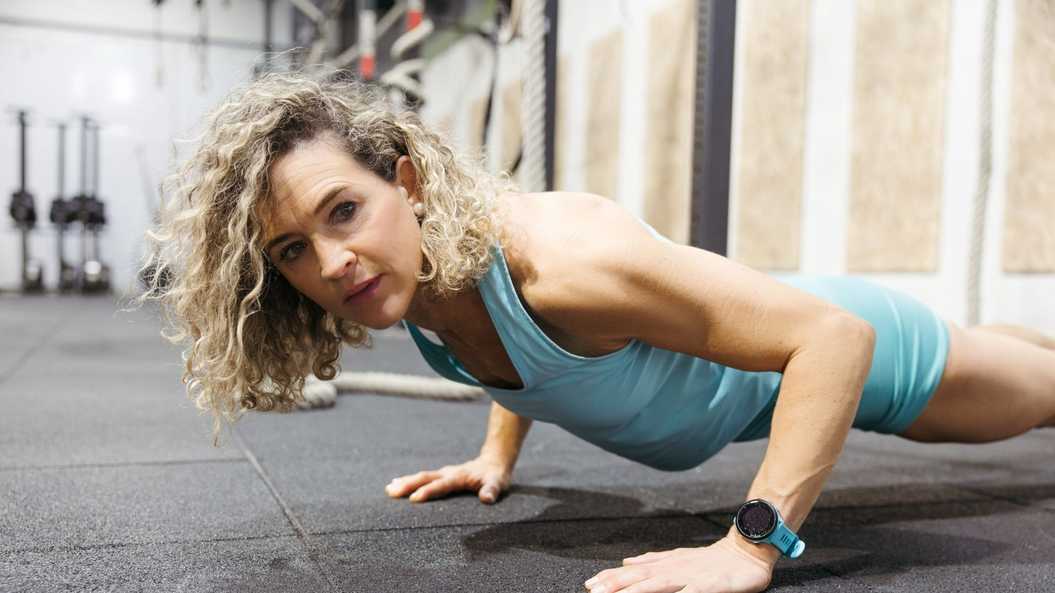
Rachel walked into our Portland studio on her forty-second birthday with a goal that sounded impossible. She wanted to lose fifteen pounds of fat and gain ten pounds of muscle. Not in that order. Simultaneously. Her trainer had told her it could not be done. Her doctor had told her to focus on weight loss first, then worry about muscle. The internet had told her to eat at maintenance, lift heavy, and hope for the best. She was frustrated, confused, and convinced her body was broken because it did not respond like the twenty-five-year-olds in her CrossFit class.
I put her on the DEXA platform and ran a full scan. Her body fat was 34%. Her lean mass was ninety-two pounds. Her bone density was below average for her age. Her visceral fat area was in the top third. She was not broken. She was forty-two, perimenopausal, and following protocols designed for young men. The old rules do not apply to women over forty, not because their bodies are defective, but because their hormonal environment has changed in ways that make the standard advice — eat less, move more, lift heavy — incomplete at best and counterproductive at worst.
The central issue is estrogen. Starting in the late thirties and accelerating through the forties, perimenopausal women experience fluctuating and ultimately declining estrogen levels. Estrogen is anabolic to muscle tissue. It promotes muscle protein synthesis, reduces muscle breakdown, and enhances the muscle-building response to resistance training. When estrogen drops, the same training stimulus produces less muscle gain. A 2018 study by Campbell et al. found that postmenopausal women required roughly 40% more training volume to achieve the same hypertrophy response as premenopausal women. Rachel was lifting three days a week, which would have been plenty at thirty. At forty-two, it was maintenance at best.
📊
Body Recomposition Planner
Plan your body recomposition with realistic timelines. Bulk rate, cut rate, maintenance calories, protein targets, and timeline to goal body fat percentage.
All data stays in your browser — we never see it.
Protein requirements also increase with age. The RDA of 0.8 grams per kilogram is based on nitrogen balance studies in young adults and is woefully inadequate for older women trying to build or preserve muscle. The research consistently shows that women over forty need 1.6 to 2.2 grams per kilogram of body weight per day to maximize muscle protein synthesis and minimize lean mass loss during fat loss. Rachel was eating roughly ninety grams of protein daily at one hundred fifty-five pounds — about 1.3 grams per kilogram. She was underfeeding her muscles by thirty to forty grams per day, every day, and wondering why she was not getting stronger.
Here is how the nutritional and training requirements shift for women over forty:
| Factor | Under 35 | Over 40 | Adjustment Needed |
|---|
| Training volume | 10-12 sets/muscle/week | 14-18 sets/muscle/week | +40% volume |
| Protein target | 1.6-2.0 g/kg | 1.8-2.4 g/kg | +0.2-0.4 g/kg |
| Calorie deficit | -500 cal/day | -250 to -350 cal/day | Smaller deficit |
| Recovery time | 48 hours | 72+ hours | More rest between sessions |
| Carb timing | Flexible | Peri-workout focus | Carbs around training |
| Progressive overload | Weekly increases | Biweekly increases | Slower progression |
📊
Lean Body Mass Calculator
Calculate lean body mass from weight and body fat percentage. Includes bone mass estimate, organ mass reference ranges, and residual mass breakdown.
All data stays in your browser — we never see it.
The calorie deficit is where most women over forty go wrong. The standard advice — create a five-hundred-calorie daily deficit to lose one pound per week — works reasonably well for young women with high estrogen and robust metabolisms. For perimenopausal women, that same deficit is often too aggressive. It triggers stress responses, elevates cortisol, disrupts sleep, and accelerates muscle loss. Rachel had been eating twelve hundred calories per day for three months. Her weight had stalled. Her energy was gone. Her sleep was broken. Her body was in survival mode, and survival mode does not build muscle or burn fat efficiently. It stores everything.
I moved Rachel to a three-hundred-calorie deficit, increased her protein to one hundred forty grams per day, added a fourth training day focused on compound lifts, and told her to sleep eight hours or skip the gym. She looked at me like I was crazy. "You want me to eat more and train less?" Not less. Smarter. The extra protein provided the building blocks for muscle. The smaller deficit prevented the stress response that was shutting down her progress. The extra recovery day allowed her muscles to actually grow between sessions. And the sleep — the sleep was non-negotiable. Growth hormone peaks during deep sleep, and without it, no amount of protein or lifting will build muscle.
📊
Body Fat Percentage Estimator
Estimate your body fat percentage using the Navy method, YMCA method, or 3-site/7-site skinfold Jackson-Pollock equations. Free. Private. No data leaves your browser.
All data stays in your browser — we never see it.
The results were not dramatic in the first month. Her weight dropped by two pounds. Her DEXA showed a one-pound fat loss and a one-pound lean mass gain — essentially a wash in total weight but a two-pound shift in composition. She was disappointed. I was thrilled. At forty-two, with declining estrogen and a history of under-eating, a two-pound recomposition in four weeks is exceptional. By month three, she had lost eight pounds of fat and gained four pounds of muscle. Her waist was down two inches. Her deadlift was up twenty-five pounds. And she was sleeping through the night for the first time in two years.
The old rules say women over forty should focus on cardio for weight loss and light weights for toning. The old rules are wrong. Cardio burns calories but does not build the muscle that perimenopausal women are losing at an accelerating rate. Light weights do not provide enough mechanical tension to stimulate muscle protein synthesis in a low-estrogen environment. Women over forty need heavier weights, more protein, smaller deficits, and more recovery than their younger selves. They need to train like athletes, not like people trying to get smaller.
I am tired of watching women over forty blame themselves for a physiological reality that is not their fault. Your body is not broken. Your hormones have changed. Your training needs to change with them. The goal is not to look twenty-five again. The goal is to be strong, functional, and metabolically healthy at whatever age you are. Rachel is forty-two and stronger than she was at thirty. That is the goal. Not the number on the scale. The strength in her body.
Can women over 40 build muscle and lose fat at the same time?
Yes, but it requires higher protein intake, more training volume, smaller calorie deficits, and more recovery than younger women. The hormonal environment of perimenopause makes recomposition slower but not impossible.
How much protein do women over 40 need?
1.8 to 2.4 grams per kilogram of body weight per day, distributed across four to five meals. This is significantly higher than the RDA and higher than what most women in this age group currently consume.
Why does weight loss stall for women over 40?
Often because the calorie deficit is too aggressive, triggering stress responses, cortisol elevation, and metabolic adaptation. A smaller deficit with higher protein and resistance training typically breaks the stall and produces better body composition.
How often should women over 40 lift weights?
Four days per week of structured resistance training, with at least seventy-two hours between sessions for the same muscle group. Focus on compound lifts — squats, deadlifts, presses, rows — with progressive overload.
Is cardio bad for women over 40 trying to recomp?
Not bad, but secondary. Resistance training should be the priority because it builds the muscle mass that perimenopausal women are losing. Cardio can be added for cardiovascular health and additional calorie expenditure, but it should not replace lifting.
Rachel celebrated her forty-third birthday with a new deadlift PR and a DEXA scan that showed she had hit her goal — fifteen pounds of fat lost, ten pounds of muscle gained — six months ahead of schedule. She did it by breaking every rule she had been taught. She ate more. She lifted heavier. She rested longer. And she stopped apologizing for having a body that required different care than it did twenty years ago.
Your body is not a younger version of itself. It is what it is. Train it accordingly.
— Emily Clarke, Exercise Physiologist, Portland, Oregon