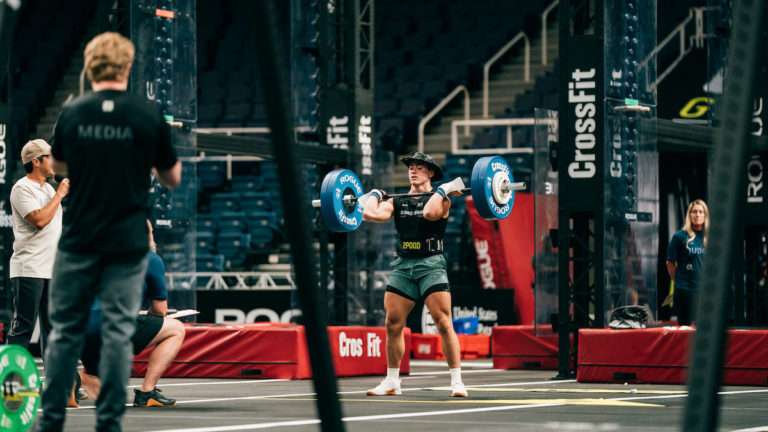
David showed up at our Portland studio three days before the Rose City Summer Slam with a problem I had seen a dozen times before. He needed to make weight for the RX division, and his home BIA scale was giving him three different readings in one morning: 14.2%, 16.8%, and 12.4%. He had already cut his water intake to dangerous levels, added two-a-day cardio sessions, and was eating less than 1,200 calories per day. His coach had told him to "trust the lowest number." His coach was wrong, and David was about to step on a competition floor dehydrated, underfed, and primed for injury.
CrossFit competition prep is where body fat testing goes from confusing to dangerous. The stakes are high — weight classes, division eligibility, team standings — and the timeline is compressed. Athletes need accurate numbers, and they need them fast. But the methods most CrossFitters use — consumer BIA scales, gym bioimpedance machines, and visual estimates from coaches — are so unreliable under competition conditions that they are essentially useless. I have watched athletes miss weight cuts they should have made, and make cuts they should have skipped, because they trusted the wrong number at the wrong time.
The first problem is timing. Most CrossFit competitions require weigh-ins anywhere from two hours to twenty-four hours before the first event. That means athletes are often testing their body fat and weight during the final week of prep, when they are already manipulating water, sodium, and carbohydrates. A BIA scale during a water cut will read artificially high because dehydration increases electrical resistance. A skinfold test during carb depletion will read artificially low because glycogen depletion reduces subcutaneous water and makes skinfolds thinner. DEXA during peak week is the most stable option, but even DEXA can shift by plus or minus 0.5% to 1% due to hydration changes. The method you choose and the day you test matter as much as the number itself.
📊
Body Fat Percentage Estimator
Estimate your body fat percentage using the Navy method, YMCA method, or 3-site/7-site skinfold Jackson-Pollock equations. Free. Private. No data leaves your browser.
All data stays in your browser — we never see it.
Here is the protocol I developed for our Portland athletes preparing for competitions like the Rose City Summer Slam:
| Phase | Timing | Method | Purpose |
|---|
| Baseline | 12 weeks out | DEXA | True starting point |
| Progress check | 8 weeks out | 7-site skinfold | Trend tracking |
| Mid-prep | 4 weeks out | DEXA or Bod Pod | Verify lean mass preservation |
| Peak week start | 7 days out | Navy method + weight | Estimate final weight class |
| Pre-weigh-in | 24-48 hours out | Weight only (no BF) | Confirm weight, not composition |
| Post-comp | 3-7 days after | DEXA | Assess damage and recovery |
The baseline DEXA twelve weeks out is non-negotiable. It gives you a true reference point for lean mass, fat mass, bone density, and visceral fat area. Without it, you have no way to know whether your peak week manipulations are costing you muscle. I have seen athletes lose four pounds of lean mass during a six-week competition prep because they were so focused on the scale that they forgot to preserve the tissue that makes them strong.
📊
Skinfold Measurement Tracker
Log your skinfold measurements over time. Site selection guide, mm trend chart, and technician error warnings. All data stored locally.
All data stays in your browser — we never see it.
The Navy method at seven days out is my preferred tool for estimating final weight class. It uses circumference measurements — neck, waist, and hip — which are far less affected by acute water and sodium manipulation than BIA or skinfolds. The Navy equation has an error margin of about plus or minus 3% to 4% compared to DEXA, but for weight class estimation, you do not need clinical precision. You need a consistent, repeatable number that tells you whether you are on track. Our free Body Fat Percentage Estimator includes the Navy method and lets you plug in your measurements to see where you stand.
The twenty-four to forty-eight hour pre-weigh-in check is weight only. Do not test body fat during peak week. Your body is not in a normal state. Your water, sodium, and glycogen are manipulated. Any body fat reading you get will be meaningless. Just check your weight, confirm you are on track for your class, and make final adjustments if needed. The body fat test can wait until after you have rehydrated and refed.
📊
BMI vs Body Fat Analyzer
Compare BMI and body fat percentage side by side. Detect BMI false positives for athletes and flag normal weight obesity. Free. Private.
All data stays in your browser — we never see it.
The post-competition DEXA is where the real learning happens. I have athletes come back a week after competition and discover they lost six pounds of lean mass during prep. That is not a badge of honor. That is metabolic damage that will take months to repair. The post-comp DEXA tells you exactly what your peak week cost you, and it guides your recovery nutrition and training. If you lost significant lean mass, you need a deliberate rebuilding phase before your next competition cycle. If you preserved muscle, you know your prep protocol works and you can repeat it.
David ended up making weight with a two-pound buffer, but only because we switched his testing protocol at the last minute. We abandoned his BIA scale, used the Navy method with consistent morning measurements, and focused on his weight trend rather than his body fat percentage during peak week. He competed well, placed fourth in his division, and came back for a post-comp DEXA that showed he had preserved 94% of his lean mass. That is the goal. Not the lowest body fat percentage. The best performance with the least metabolic cost.
How do I estimate my weight class accurately before a CrossFit competition?
Use the Navy method with consistent morning measurements starting seven days out. It is less affected by water and sodium manipulation than BIA or skinfolds. Track your weight trend daily but your body fat only at baseline and post-comp.
Why is my BIA scale useless during peak week?
Because BIA is extremely sensitive to hydration, and peak week involves deliberate water and sodium manipulation. A dehydrated athlete will show artificially high body fat on BIA. The reading is tracking water loss, not fat loss.
Should I get a DEXA scan before every competition?
A baseline DEXA at twelve weeks out and a post-comp DEXA one week after are ideal. A mid-prep DEXA at four weeks out is optional but useful for verifying lean mass preservation. Daily or weekly DEXA is unnecessary and expensive.
How much lean mass can I lose during competition prep?
In aggressive deficits with inadequate protein, athletes can lose 10% to 20% of their lean mass during a six to twelve week prep. With proper resistance training, protein intake, and moderate deficits, losses can be kept under 5%.
What is the safest way to cut weight for a CrossFit competition?
Start early — twelve to sixteen weeks out — with a moderate deficit that preserves muscle. Use DEXA to monitor lean mass. Manipulate water and sodium only in the final three to five days, and never dehydrate to the point of impaired performance or health.
The Rose City Summer Slam is one of the best-run competitions in the Pacific Northwest, and I love watching Portland athletes compete at a high level. But I hate watching them destroy their bodies for a number on a scale. Your body fat percentage is not your worth. Your weight class is not your identity. The goal is to perform at your best with the body you have, not to sacrifice your health for a podium finish.
Train smart. Test smart. Compete smart.
— Emily Clarke, Portland, Oregon