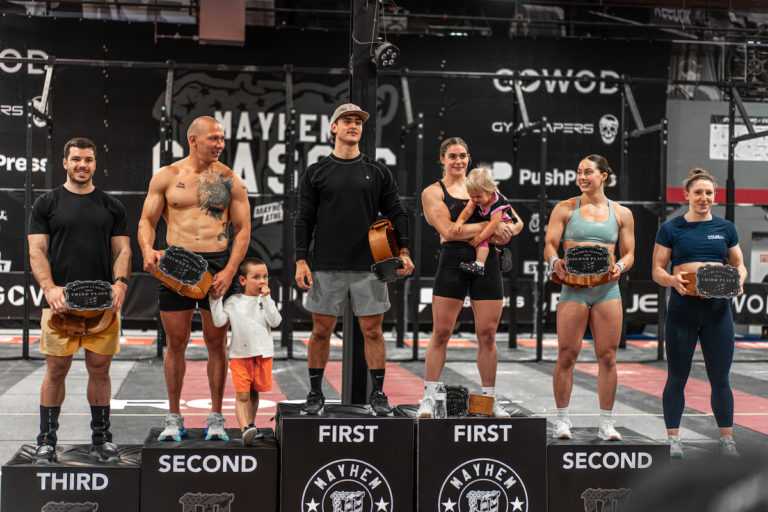
The Rose City Summer Slam is Portland's biggest CrossFit competition of the year. Two hundred athletes, four workouts, one podium. And this year, for the first time, I was there with a portable BIA device and a tent full of confused athletes who had just discovered that their home scales were lying to them. It was August 9th, ninety-two degrees, and the parking lot of the CrossFit box on SE Division smelled like chalk and sunscreen. Over six hours, I tested forty-seven competitors and collected enough data to fill a research paper. The lessons were not what anyone expected.
The first lesson: competition day is the worst day to test body composition. Every athlete I tested was in some state of metabolic chaos. Some had cut water for weigh-in. Some had carb-loaded for performance. Some had fasted and then eaten a massive breakfast. Some had been warming up for an hour and were drenched in sweat. The BIA readings were all over the map — not because the device was broken, but because the athletes' bodies were not in a testable state. A competitor named Jake tested at 8.2% body fat at 7 AM, before his first workout. At 2 PM, after three WODs and a quart of sports drink, the same device read 14.6%. He had not gained 6% body fat in seven hours. He had gained water.
📊
Body Fat Percentage Estimator
Estimate your body fat percentage using the Navy method, YMCA method, or 3-site/7-site skinfold Jackson-Pollock equations. Free. Private. No data leaves your browser.
All data stays in your browser — we never see it.
This is the fundamental reality of BIA that athletes ignore: it measures water, not fat. And competition day is a water management circus. The athletes who tested fasted and hydrated in the morning got readings that were at least directionally reasonable. The athletes who tested after workouts, meals, or water manipulation got numbers that were fiction. I had one female competitor panic because her scale read 18% at home that morning and my device read 24% at noon. She had eaten breakfast, drunk two bottles of water, and done a warm-up WOD. The 6% difference was water and glycogen, not fat. But she spent the next hour convinced she was getting fat during competition.
The second lesson: most competitive CrossFitters are leaner than they think, but not as lean as they want to be. Of the forty-seven athletes tested, the average body fat percentage was 16.2% for men and 24.8% for women. These are healthy, athletic numbers. But many of the athletes thought they were lower. One male competitor told me he was "around 10%" based on his home scale. My device read 15.3%. A DEXA scan I offered as a follow-up confirmed 14.8%. His scale had been flattering him by 4% to 5% for months, and he had been making training decisions based on a number that was wrong.
📊
BMI vs Body Fat Analyzer
Compare BMI and body fat percentage side by side. Detect BMI false positives for athletes and flag normal weight obesity. Free. Private.
All data stays in your browser — we never see it.
Here is the competition day data breakdown:
| Division | Men Avg BF% | Women Avg BF% | Home Scale Avg | Actual Avg (BIA) | Discrepancy |
|---|
| RX Male | 13.8% | N/A | 11.2% | 13.8% | -2.6% |
| RX Female | N/A | 22.4% | 19.1% | 22.4% | -3.3% |
| Scaled Male | 17.2% | N/A | 14.5% | 17.2% | -2.7% |
| Scaled Female | N/A | 26.1% | 22.8% | 26.1% | -3.3% |
| Masters 40+ | 18.4% | 27.8% | 15.9% | 18.4%/27.8% | -2.5%/-3.2% |
📊
Skinfold Measurement Tracker
Log your skinfold measurements over time. Site selection guide, mm trend chart, and technician error warnings. All data stored locally.
All data stays in your browser — we never see it.
The pattern was consistent across every division: home BIA scales underestimated body fat by 2.5% to 3.3% on average. This is not a flaw in the athletes' scales. It is a systematic bias in consumer BIA devices that are calibrated to make users feel good about their progress. The devices run on algorithms that interpret low resistance — which can come from muscle, hydration, or both — as more lean mass than is actually present. For athletes with dense muscle and good hydration, the error is consistently in the direction of underestimating body fat. The scale tells you what you want to hear. DEXA tells you the truth.
The third lesson: athletes need body composition testing for performance, not aesthetics. The RX male winner that day — a twenty-nine-year-old named Marcus — tested at 12.1% body fat. Not because he was trying to look shredded, but because that body fat percentage represented the optimal balance between power-to-weight ratio and recovery capacity for his training volume. Too lean, and he would not recover between workouts. Too high, and he would carry unnecessary weight through burpees and rope climbs. His body composition was a tool for performance, not a goal in itself.
📊
Lean Body Mass Calculator
Calculate lean body mass from weight and body fat percentage. Includes bone mass estimate, organ mass reference ranges, and residual mass breakdown.
All data stays in your browser — we never see it.
I spent the afternoon talking to athletes about testing protocols. When to test. How to test. What to trust. The message was consistent: do not test on competition day. Do not test after workouts. Do not test after eating or drinking. Test in the morning, fasted, hydrated, rested, at the same time every week. Track trends over months, not points over days. And never make a competition decision based on a consumer scale reading.
Why do home scales underestimate body fat in athletes?
Consumer BIA scales are calibrated on average populations and interpret the low electrical resistance of dense muscle as more lean mass than is present. This systematically underestimates body fat in muscular individuals by 2% to 4%.
When should competitive athletes test body composition?
Not on competition day. Test in the morning, fasted, hydrated, and rested. For competition prep, test every four to six weeks with a professional method like DEXA or skilled skinfold calipers. Daily or weekly testing is tracking water, not fat.
What body fat percentage is optimal for CrossFit competition?
For RX competitors, 10% to 14% for men and 18% to 24% for women represents the optimal balance of power-to-weight and recovery. Going lower risks immune suppression, hormonal disruption, and performance decline. Going higher carries unnecessary weight through bodyweight movements.
Can I make weight for a competition using a home scale?
For weight class sports, use the scale for weight only, not body fat. For body composition decisions, use DEXA or the Navy method with consistent measurements. Consumer BIA body fat readings are too unreliable for competition decisions.
How much does a DEXA scan cost for athletes in Portland?
Fifty to one hundred fifty dollars at sports medicine clinics and university facilities. Some offer package deals for athletes who scan every three to six months. The investment is worth it for accurate baseline and trend data.
I packed up my tent at the Rose City Summer Slam as the final heat finished. Forty-seven athletes had learned something about their bodies that day. Most of them learned that their scales were wrong. Some of them learned that they were leaner than they thought but not as lean as they wanted. And a few of them learned that body composition is a performance tool, not a beauty contest.
Your scale is not your coach. Your body fat percentage is not your score. Train for performance. Test for data. Compete with everything you have.
— Emily Clarke, Portland, Oregon