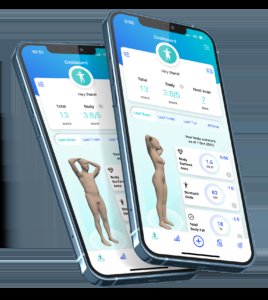
My partner Alex sent me a link last month with the subject line "we are obsolete." It was a press release from a tech company at CES 2026 announcing a new smartphone app that could estimate body fat percentage from a single photo. No scale. No calipers. No DEXA scan. Just point your camera at your reflection, tap a button, and get a body fat reading in under ten seconds. The company claimed "clinical-grade accuracy" and said their AI had been trained on over two hundred thousand 3D body scans. Alex was joking about us being obsolete, but I was not laughing. I was reading the fine print.
I have been skeptical of technology claims about body composition since a client brought me a consumer BIA scale in 2019 that promised to measure visceral fat, muscle quality, and metabolic age. It was a fifty-dollar bathroom scale with a Bluetooth chip and a marketing department. The PhotoScan apps of 2026 are more sophisticated — they use computer vision, machine learning, and sometimes depth-sensing cameras to estimate body shape and volume — but the fundamental question is the same: are they measuring body fat, or are they measuring something that correlates with body fat under ideal conditions and falls apart in the real world?
The technology behind these apps falls into two categories. The first is photogrammetric estimation: you take front and side photos, the app uses edge detection algorithms to identify body landmarks like your waist, hips, shoulders, and neck, and it applies a statistical model to estimate body fat percentage based on those circumferences and ratios. The second is AI-driven 3D reconstruction: some newer phones and apps use depth sensors or structured light to build a rough 3D model of your body, then estimate volume and apply density assumptions to calculate fat and lean mass. Both approaches are clever. Neither is accurate enough to replace professional testing.
📊
Bioelectrical Impedance Guide
Understand how BIA works, what affects accuracy, and how to get the most consistent readings. Hydration, electrode placement, consumer vs professional devices.
All data stays in your browser — we never see it.
The photogrammetric method has a critical flaw: it only sees your surface. It measures circumferences and ratios, not tissue composition. Two people with identical waist and hip measurements can have dramatically different body fat percentages depending on their muscle mass, bone structure, and fat distribution. A powerlifter and a sedentary office worker might look similar in a photo — same height, same waist — but the powerlifter could be 18% body fat while the office worker is 32%. The app sees the outline. It does not see what is inside.
The 3D reconstruction method is better in theory because it estimates volume, and volume combined with density assumptions could theoretically yield mass estimates. But the depth sensors on consumer phones have resolution limits. The iPhone's LiDAR sensor, for example, has an accuracy of about plus or minus 1% at one meter, which translates to roughly plus or minus 1.5 centimeters of body surface error when scanning a human torso. That error propagates through volume calculations and can produce body fat estimates that are off by plus or minus 5% to 8% compared to DEXA. That is the same error range as a cheap consumer BIA scale, except the BIA scale at least measures an actual physiological property rather than guessing from a low-resolution mesh.
Here is how smartphone PhotoScan apps compare to established methods:
| Method | Typical Error | What It Actually Measures | Cost |
|---|
| DEXA Scan | ±1-2% | X-ray tissue density | $50-$150 |
| Bod Pod | ±2-3% | Air displacement volume | $40-$100 |
| 7-Site Skinfold | ±3-4% | Subcutaneous fat thickness | $15-$40 |
| Consumer BIA Scale | ±4-8% | Electrical impedance | $30-$200 |
| Smartphone PhotoScan | ±5-10% | Surface geometry estimate | $0-$10/month |
| Visual Self-Assessment | ±6-12% | Subjective appearance | Free |
📊
Body Fat Percentage Estimator
Estimate your body fat percentage using the Navy method, YMCA method, or 3-site/7-site skinfold Jackson-Pollock equations. Free. Private. No data leaves your browser.
All data stays in your browser — we never see it.
The training data issue is another red flag. These apps claim to be trained on tens or hundreds of thousands of scans, but where did that data come from? Most likely from research databases that are heavily skewed toward young, white, male, college-aged subjects — the same populations that break most body composition equations. If the AI was trained primarily on DEXA scans from a university lab, it will perform well on people who look like university students and poorly on everyone else. I have not seen a single PhotoScan app publish validation data broken down by age, ethnicity, or body type, which is the minimum standard for any clinical measurement tool.
Lighting and pose are also enormous sources of error. The apps instruct you to stand in specific positions, but human bodies are not rigid mannequins. Slight changes in shoulder position, hip angle, or knee bend change the apparent ratios in the photo. Lighting from above versus below changes shadow patterns and edge detection. Clothing — even tight clothing — compresses soft tissue and alters circumferences by centimeters. I tested one popular app by taking five photos in a row, changing nothing but my shoulder angle, and got body fat estimates ranging from 21% to 29%. That is not measurement error. That is random number generation with a camera attached.
📊
BMI vs Body Fat Analyzer
Compare BMI and body fat percentage side by side. Detect BMI false positives for athletes and flag normal weight obesity. Free. Private.
All data stays in your browser — we never see it.
But here is where I become conflicted, because I am not entirely against these apps. They are free, they are accessible, and they get people thinking about body composition who might otherwise never consider it. For someone who has never measured their body fat and wants a rough starting point, a PhotoScan app is better than nothing. It is better than BMI. It is better than the mirror alone. The problem is not that the apps exist. The problem is that they claim accuracy they do not have, and people make real decisions — cutting calories, changing training, even seeking medical intervention — based on numbers that are basically fiction.
I would love to see these apps marketed honestly: "This is a fun, free tool that gives you a rough estimate of your body fat percentage based on your photo. The error margin is large — probably plus or minus 5% to 10% — so do not make major decisions based on it. Use it to track general trends over months, not daily changes. For accurate measurement, see a professional." That is an honest product. That is a useful product. But "clinical-grade accuracy" is a lie, and I am tired of lies in this industry.
The future of smartphone body composition might actually be interesting. If Apple or another manufacturer integrates true 3D scanning with higher-resolution depth sensors, and if the training datasets become genuinely diverse, and if the apps publish transparent validation studies, we might eventually get to plus or minus 3% or 4% accuracy. That would make smartphone body composition competitive with consumer BIA and potentially useful for trend tracking. But we are not there yet. The technology of 2026 is not the technology of 2030, and pretending otherwise does a disservice to everyone who trusts these numbers.
Can a smartphone app accurately measure body fat?
No, not with clinical accuracy. Current PhotoScan apps have error margins of plus or minus 5% to 10% compared to DEXA, which is worse than consumer BIA scales. They estimate surface geometry, not tissue composition.
Why do different PhotoScan apps give me different body fat percentages?
Because each app uses different algorithms, different training data, and different body landmark detection methods. Lighting, pose, and clothing also introduce variation. The spread between apps often exceeds the actual change in your body fat over months.
Are PhotoScan apps completely useless?
Not completely. They are free, accessible, and can provide a rough starting point for people who have never measured body fat. But they should not be used for precise tracking or major health decisions. Treat them as entertainment, not data.
What is the most accurate way to measure body fat at home?
Skinfold calipers with a standardized protocol like the 7-site Jackson-Pollock method, used by someone with basic training, can achieve plus or minus 3% to 4% accuracy. Our free Body Fat Percentage Estimator uses the Navy and Jackson-Pollock equations and is more consistent than PhotoScan apps.
Will smartphone body fat measurement ever become accurate?
Possibly, if depth sensor resolution improves dramatically and training datasets become truly diverse. But as of 2026, the technology is not there. Do not make health decisions based on a photo.
Alex and I spent an hour that evening testing every PhotoScan app we could find. We laughed at the wild variation. We got angry at the "clinical-grade" claims. And we ended the night with a shared understanding: technology can augment human judgment, but it cannot replace it. Not yet. Maybe not ever.
Your body deserves better than a camera guess.
— Emily Clarke, Exercise Physiologist & Former Fitness Studio Body-Testing Lead