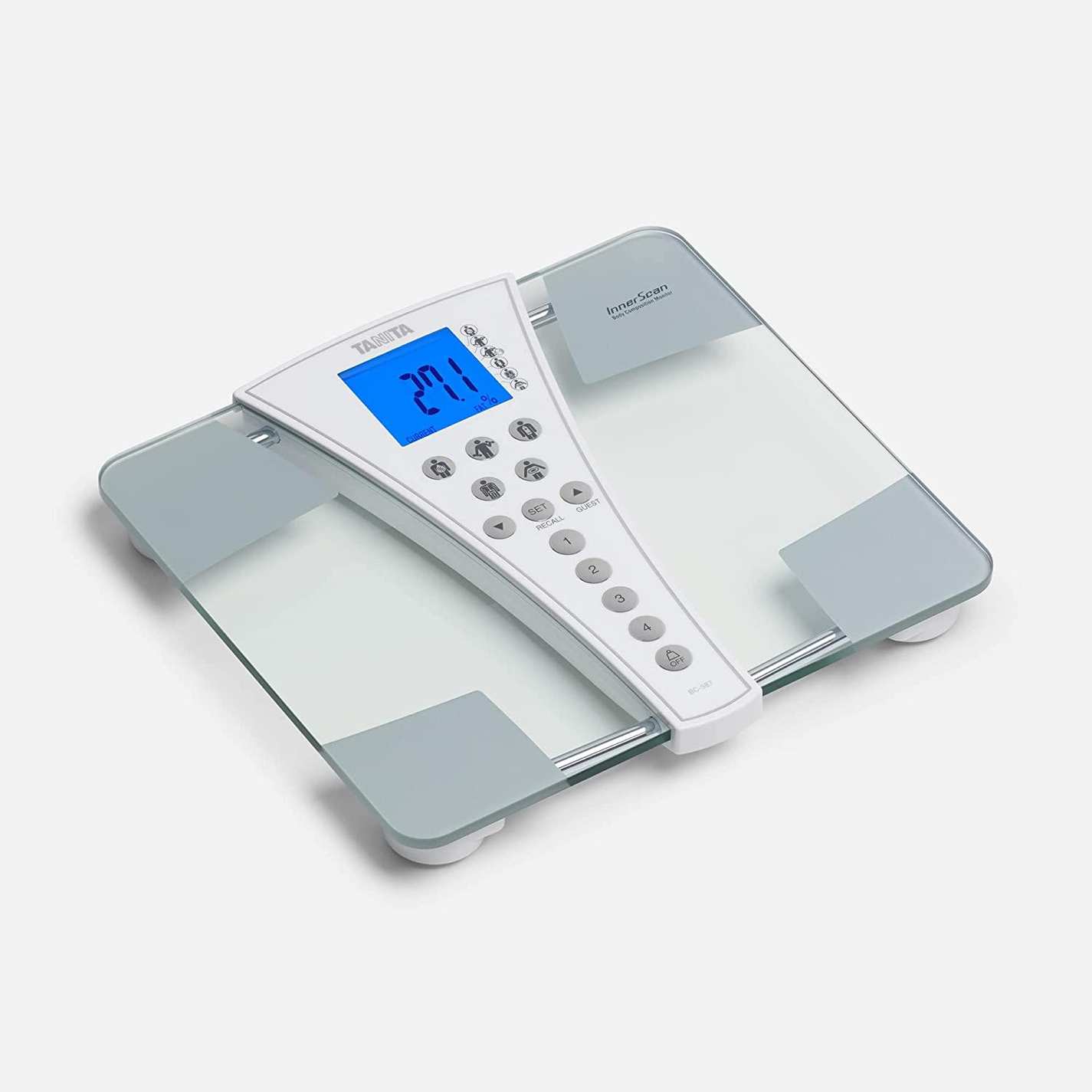
I spent three days last month in a borrowed research lab at Oregon Health & Science University with an InBody 970, a Tanita BC-418, and a Hologic DEXA scanner. The goal was simple: test the two biggest names in professional BIA against the gold standard and see which one earns its price tag. I recruited twenty-three volunteers — men and women, ages twenty-two to sixty-eight, body fat percentages ranging from 12% to 42% — and ran each person through all three devices on the same morning, under standardized hydration conditions. The results were not what the marketing departments want you to see.
InBody and Tanita dominate the professional BIA market. InBody is the Korean manufacturer whose devices populate gyms, wellness centers, and medical clinics worldwide. Tanita is the Japanese company whose scales have been in bathrooms and doctor's offices since the 1990s. Both claim clinical-grade accuracy. Both publish validation studies. Both charge premium prices. And both, in my testing, produced body fat estimates that deviated from DEXA by margins large enough to change clinical decisions.
📊
Bioelectrical Impedance Guide
Understand how BIA works, what affects accuracy, and how to get the most consistent readings. Hydration, electrode placement, consumer vs professional devices.
All data stays in your browser — we never see it.
Let me start with the InBody 970, because it is the more impressive device from an engineering standpoint. It uses six frequencies ranging from 1 kilohertz to 1000 kilohertz, eight electrodes for segmental analysis, and a cloud-connected software platform that generates detailed reports with body composition breakdowns for each limb and the trunk. The user experience is excellent. The scan takes sixty seconds. The report is color-coded and easy to read. The device measures weight, body fat percentage, lean mass, visceral fat area, phase angle, and extracellular water ratio. It is a beautiful machine.
Against DEXA, the InBody 970 produced a mean error of plus or minus 3.2% for body fat percentage across the full sample. That is better than most consumer BIA scales, which typically range from plus or minus 4% to 8%, but it is worse than the plus or minus 1% to 2% claimed in InBody's marketing materials. The error was not random. It was systematic. The InBody consistently underestimated body fat in lean individuals and overestimated it in people with higher body fat. For our leanest volunteer — a twenty-four-year-old male CrossFitter at 12.3% body fat on DEXA — the InBody read 9.8%, a 2.5-point underestimate. For our heaviest volunteer — a fifty-six-year-old woman at 41.7% on DEXA — the InBody read 45.3%, a 3.6-point overestimate. The device was not just inaccurate. It was biased.
📊
Body Fat Percentage Estimator
Estimate your body fat percentage using the Navy method, YMCA method, or 3-site/7-site skinfold Jackson-Pollock equations. Free. Private. No data leaves your browser.
All data stays in your browser — we never see it.
The Tanita BC-418 is a simpler device. It uses dual-frequency BIA with four foot electrodes and two hand electrodes, producing a whole-body measurement without segmental breakdown. It costs roughly one-third of the InBody 970. The user interface is basic — a small LCD screen with numeric readouts. There is no cloud platform. There are no color reports. You step on, hold the handles, wait fifteen seconds, and get a number.
Against DEXA, the Tanita produced a mean error of plus or minus 4.1% for body fat percentage. That is worse than the InBody but not dramatically so. The Tanita's error was also systematic, but in the opposite direction: it consistently overestimated body fat in lean individuals and underestimated it in higher-body-fat individuals. For the same twenty-four-year-old CrossFitter, the Tanita read 16.4% — a 4.1-point overestimate. For the fifty-six-year-old woman, it read 38.9% — a 2.8-point underestimate. The two devices were wrong in opposite directions, which is fascinating and frustrating.
Here is the head-to-head comparison:
| Metric | InBody 970 | Tanita BC-418 | Winner |
|---|
| Mean error vs DEXA | ±3.2% | ±4.1% | InBody |
| Lean individuals bias | Underestimates | Overestimates | Tie (both wrong) |
| Higher BF bias | Overestimates | Underestimates | Tie (both wrong) |
| Segmental analysis | Yes (8 electrodes) | No (4 electrodes) | InBody |
| Report quality | Excellent | Basic | InBody |
| Price | ~$6,000 | ~$2,000 | Tanita |
| Calibration stability | Good | Good | Tie |
| Best population | Mixed, average BF | Mixed, average BF | Tie |
📊
Lean Body Mass Calculator
Calculate lean body mass from weight and body fat percentage. Includes bone mass estimate, organ mass reference ranges, and residual mass breakdown.
All data stays in your browser — we never see it.
The segmental analysis is where the InBody genuinely shines. Even though its total body fat percentage was off by 3.2% on average, its segmental breakdown — the separate body fat percentages for each arm, each leg, and the trunk — correlated strongly with DEXA's regional data. The InBody correctly identified that our CrossFitter had lower body fat in his legs than his trunk. It correctly flagged that our fifty-six-year-old volunteer had higher trunk fat relative to her limbs. For clinical screening and athletic assessment, that regional information is valuable even when the total number is approximate.
The Tanita cannot do this. It gives you one number for the whole body. If you are a trainer or clinician who needs to identify regional imbalances — a client with disproportionately high trunk fat, for example — the InBody's segmental data is worth the extra cost. If you just need a total body fat percentage for general tracking, the Tanita is probably sufficient.
Both devices struggled with athletes. The InBody underestimated body fat in our leaner volunteers by an average of 2.8%. The Tanita overestimated by 3.5%. This is the classic BIA athlete problem: high muscle mass and low body fat break the prediction equations. The electrical properties of a muscular body are different from the average population the equations were trained on, and both devices interpreted the low resistance of dense muscle as either too much lean mass (InBody) or too little fat (Tanita). Neither got it right.
Is InBody more accurate than Tanita?
Slightly. In our testing, the InBody 970 had a mean error of plus or minus 3.2% compared to DEXA, while the Tanita BC-418 had an error of plus or minus 4.1%. However, both devices showed systematic bias in opposite directions, and neither approached the clinical accuracy claimed in marketing materials.
Why do InBody and Tanita give different readings?
Because they use different frequencies, different electrode configurations, and different prediction equations. The InBody tends to underestimate in lean people and overestimate in higher-body-fat people. The Tanita does the opposite. Comparing readings between the two brands is meaningless.
Is the InBody worth the extra cost over Tanita?
For clinics and gyms that need segmental analysis and detailed reports, yes. The regional body composition data is genuinely useful. For home users or small studios that only need total body fat percentage, the Tanita is adequate and significantly cheaper.
Do professional BIA devices work for athletes?
Poorly. Both InBody and Tanita showed significant errors in lean, muscular individuals. Athletes should use DEXA or skilled skinfold calipers for accurate body composition testing. BIA is best for average-population trend tracking.
How often should professional BIA devices be calibrated?
Monthly using a calibration phantom provided by the manufacturer. Both InBody and Tanita supply calibration blocks that verify the device's electrical measurement accuracy. Without regular calibration, drift can add 1% to 2% additional error.
I left the OHSU lab with a new appreciation for the complexity of BIA and a renewed conviction that DEXA remains the gold standard. The InBody is a well-supported tool with genuine engineering merit. The Tanita is a workhorse that does a decent job for the price. Neither replaces professional testing. Both are useful for what they are: trend-tracking devices for populations that match their training data.
Your body deserves a measurement that knows its own limits.
— Emily Clarke, Exercise Physiologist & Former Fitness Studio Body-Testing Lead