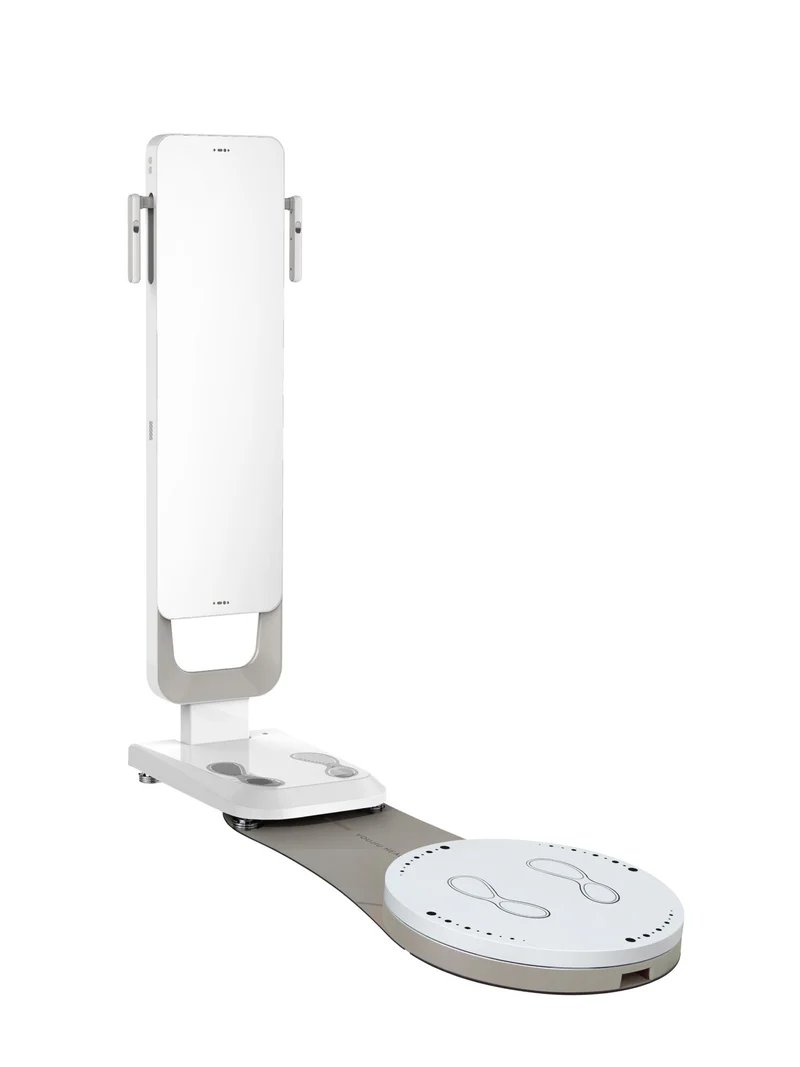
A new wellness center opened on NW 23rd last month with a Styku 3D body scanner in the lobby and a DEXA machine in the back room. They are offering both scans for the same price, and their marketing material says either one will give you "a complete picture of your body composition." I walked in, introduced myself as an exercise physiologist, and asked the technician which scan he would recommend for an athlete preparing for competition. He shrugged and said, "They are both pretty much the same." I left before I said something I would regret.
They are not the same. They are not even close to the same. A 3D body scanner and a DEXA scan measure fundamentally different properties of your body, produce different types of data, and have different accuracy profiles for different populations. Treating them as interchangeable is like saying a blood pressure cuff and an EKG are "pretty much the same" because they both measure something about your heart. The level of misunderstanding in that wellness center is exactly why I built BodyCompCheck — because people deserve to know what their numbers actually mean before they spend money on them.
Let me break down what each technology actually does. DEXA, or dual-energy X-ray absorptiometry, uses two X-ray energy levels to distinguish bone mineral, lean soft tissue, and fat soft tissue based on their different rates of X-ray attenuation. It is a well-supported, extensively validated method with decades of research behind it. A properly calibrated DEXA scanner can measure total body fat percentage with an error margin of roughly plus or minus 1% to 2%, and it is the only widely available method that also gives you bone mineral density, regional body composition, and visceral fat area. When I ran the DEXA program at our Portland studio, it was our reference standard for every other method we used.
3D body scanners like Fit3D, Styku, and mPod use structured light or infrared sensors to create a three-dimensional mesh of your body surface. They do not measure tissue composition directly. They measure surface geometry — your circumferences, lengths, and volumes — and then apply predictive equations to estimate body fat percentage based on those surface measurements. The technology is impressive from an engineering standpoint. The accuracy, however, is a different story.
📊
Body Fat Percentage Estimator
Estimate your body fat percentage using the Navy method, YMCA method, or 3-site/7-site skinfold Jackson-Pollock equations. Free. Private. No data leaves your browser.
All data stays in your browser — we never see it.
Here is the direct comparison:
| Feature | DEXA | 3D Body Scanner |
|---|
| What it measures | X-ray tissue density | Surface geometry |
| Body fat accuracy | ±1-2% | ±3-6% |
| Bone density | Yes | No |
| Visceral fat | Yes | Estimated only |
| Regional composition | Yes (arms, legs, trunk) | Circumferences only |
| Lean mass accuracy | ±1-2% | ±3-5% |
| Radiation exposure | ~1-10 microsieverts | None |
| Test duration | 6-12 minutes | 30-60 seconds |
| Cost per scan | $50-$150 | $20-$60 |
| Validation literature | Extensive (30+ years) | Limited (5-10 years) |
The accuracy gap is the critical issue. A 2019 validation study by Tinsley et al. compared the Fit3D scanner against DEXA in a mixed population of men and women and found a mean error of plus or minus 4.1% for body fat percentage estimation. That is more than double the error of DEXA. For an individual, that means your 3D scan could say 20% body fat while your actual DEXA-measured body fat is anywhere from 16% to 24%. That range spans three entire categories on most body fat charts.
📊
Lean Body Mass Calculator
Calculate lean body mass from weight and body fat percentage. Includes bone mass estimate, organ mass reference ranges, and residual mass breakdown.
All data stays in your browser — we never see it.
The population bias is also significant. Most 3D scanner validation studies have been done on relatively lean, young adults. When researchers test these devices on older adults, people with higher body fat, or athletes with atypical body shapes, the error increases dramatically. A 2021 study by Lee et al. found that 3D body scanners overestimated body fat by an average of 6.3% in male powerlifters compared to DEXA, because the predictive equations were not calibrated for the dense muscle mass and compressed soft tissue typical of strength athletes. The scanner saw a thick torso and assumed fat. It was mostly muscle.
That said, 3D scanners have one genuine advantage: they are fast, non-invasive, and radiation-free. For someone who needs frequent tracking — like a physique competitor in the final weeks of prep — the speed and zero-radiation profile of a 3D scan might justify the lower accuracy. You can scan weekly without concern, track circumference trends, and use the visual feedback to guide your final water and carb manipulations. But you should not use a 3D scan as your baseline or your final verification. For that, you need DEXA.
📊
Bioelectrical Impedance Guide
Understand how BIA works, what affects accuracy, and how to get the most consistent readings. Hydration, electrode placement, consumer vs professional devices.
All data stays in your browser — we never see it.
I also want to address the visceral fat claim, because 3D scanner marketing loves to talk about it. DEXA can directly measure visceral fat area by analyzing the fat compartment within the abdominal cavity. It is not perfect — DEXA uses a software algorithm to separate visceral from subcutaneous fat, and the accuracy depends on scan quality — but it is the best non-invasive method available outside of CT or MRI. 3D scanners cannot measure visceral fat at all. They estimate it from waist circumference and waist-to-hip ratio, which are correlates of visceral fat, not measurements of it. The difference is like estimating rainfall from cloud color versus measuring it with a rain gauge. One is a guess. The other is data.
The market for 3D body scanning is growing fast — projected to hit $1.2 billion by 2030 according to Grand View Research — and I understand the appeal. The scans are cool. You get a rotating 3D image of yourself. You can overlay before-and-after models. The technology feels futuristic. But feeling futuristic is not the same as being accurate, and I am tired of watching people pay for scans that give them worse data than a twenty-dollar tape measure and a Navy method calculation.
If you are choosing between DEXA and a 3D scan in 2026, here is my practical advice. Use DEXA for your baseline, your annual check-in, and any major decision point — starting a bulk, beginning a cut, evaluating a training program. Use a 3D scan only if you need frequent, radiation-free tracking and you understand that the numbers are approximate. Never compare a 3D scan number directly to a DEXA number. They are not the same measurement. Comparing them is like comparing your speedometer to your GPS to your friend's guess — they are all estimates, but they estimate different things.
Is a 3D body scanner as accurate as DEXA?
No. 3D scanners have error margins of plus or minus 3% to 6% for body fat compared to DEXA's plus or minus 1% to 2%. They measure surface geometry and estimate body fat through equations, while DEXA measures actual tissue density with X-rays.
Why do 3D scanners overestimate body fat in muscular people?
Because the predictive equations are calibrated on average populations and interpret thick torsos and large limbs as fat rather than muscle. Strength athletes can see overestimates of 5% to 8% compared to DEXA.
Can 3D scanners measure visceral fat?
No. They estimate visceral fat from waist circumference and ratio, which are only correlates. DEXA directly measures visceral fat area through software analysis of the abdominal compartment.
When is a 3D scan better than DEXA?
For frequent, radiation-free tracking where speed matters more than precision — such as physique competitors in final prep weeks. For baseline measurements and major decisions, DEXA remains the superior choice.
How much does a 3D body scan cost compared to DEXA?
3D scans typically cost $20 to $60, while DEXA ranges from $50 to $150. The lower cost reflects lower accuracy, not a bargain. You are paying for surface geometry, not tissue composition.
I walked out of that wellness center on NW 23rd and texted Alex: "We are definitely not obsolete." The 3D scanner is a well-supported tool for specific use cases. DEXA is the gold standard for a reason. And anyone who tells you they are "pretty much the same" has not read the research.
Your body deserves a measurement that earns your trust.
— Emily Clarke