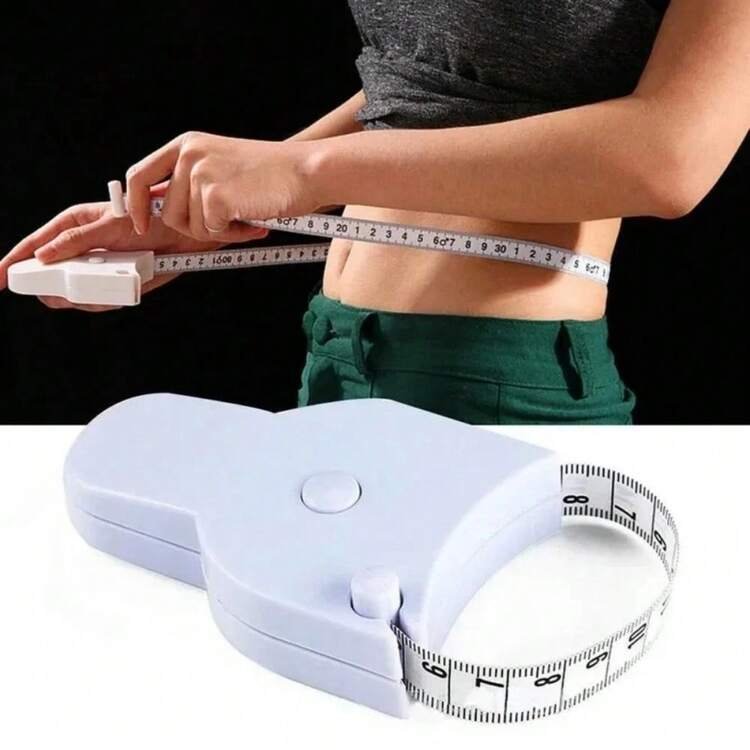
I own a three-dollar cloth tape measure from a fabric store on Hawthorne Boulevard. It is frayed at the ends, the numbers are slightly worn, and it is the most reliable body composition tool I have ever used. Not the most accurate — that title belongs to DEXA. Not the most sophisticated — that would be our skinfold calipers. But the most reliable. Because it never needs batteries. It never updates its firmware. It never drifts out of calibration. And it measures something that correlates more strongly with metabolic health than almost any other simple metric: your waist.
Circumference methods for body composition have been around since the 1950s, but they have been overshadowed by flashier technologies. BIA scales with Bluetooth. 3D body scanners with apps. DEXA machines with color reports. The humble tape measure does not sync to your phone. It does not generate graphs. It just tells you how big your waist is. But that number — waist circumference at the navel — correlates with visceral fat area with an R-value of approximately 0.85 in most populations. That means 72% of the variation in visceral fat can be predicted from waist circumference alone. Your BIA scale cannot do that. Your bathroom scale definitely cannot.
📊
Skinfold Measurement Tracker
Log your skinfold measurements over time. Site selection guide, mm trend chart, and technician error warnings. All data stored locally.
All data stays in your browser — we never see it.
The ISAK — International Society for the Advancement of Kinanthropometry — standardized circumference protocols in the 1980s, and they remain the gold standard for anthropometric assessment. The key sites are the waist (at the narrowest point or at the navel), the hip (at the widest point of the buttocks), the mid-thigh, the mid-arm, and the calf. Taken together, these five measurements provide a profile of body shape and fat distribution that no single number can capture.
For body fat estimation, the Navy method uses neck, waist, and hip measurements to estimate body fat percentage with an error of roughly plus or minus 3% to 4% compared to DEXA. The YMCA method uses waist and weight. The waist-to-height ratio uses only waist and standing height. None of these require calipers. None require electricity. All require only a tape measure and consistency.
📊
Body Fat Percentage Estimator
Estimate your body fat percentage using the Navy method, YMCA method, or 3-site/7-site skinfold Jackson-Pollock equations. Free. Private. No data leaves your browser.
All data stays in your browser — we never see it.
Here is how circumference methods compare for practical tracking:
| Method | Measurements Needed | Accuracy vs DEXA | Best Use |
|---|
| Waist alone | 1 | Correlates with visceral fat (R=0.85) | Metabolic risk screening |
| Waist-to-height ratio | 2 | Strong mortality predictor | Health risk assessment |
| Navy method | 3-4 | ±3-4% | Body fat % estimate |
| YMCA method | 2 | ±4-5% | Quick estimate |
| Full ISAK profile | 5+ | ±3-4% (with equation) | Comprehensive tracking |
📊
BMI vs Body Fat Analyzer
Compare BMI and body fat percentage side by side. Detect BMI false positives for athletes and flag normal weight obesity. Free. Private.
All data stays in your browser — we never see it.
The technique matters. I have watched people measure their waist at different levels, with different tension, at different times of day, and wonder why the number jumps by two inches. The ISAK protocol is specific: stand relaxed, arms at sides, feet together. Measure at the level of the navel for waist and the widest point of the buttocks for hip. Keep the tape horizontal and snug but not compressing the skin. Breathe normally and measure at the end of a normal exhale. Do not suck in. Do not push out. The difference between a relaxed measurement and a sucked-in measurement can be two to three inches, which translates to a five-point swing in Navy method body fat estimation.
I recommend measuring once per month, at the same time of day, under the same conditions. Morning, fasted, after bathroom, before coffee. Write the numbers down. Do not obsess over weekly changes. The trend over three months is what matters. If your waist is stable or decreasing while your training and nutrition are consistent, your visceral fat is under control. If your waist is increasing while your weight is stable, you are likely gaining visceral fat and losing muscle — the classic sarcopenic obesity pattern.
Can I accurately track body fat with just a tape measure?
Yes, for trend tracking and metabolic risk assessment. The Navy method with three measurements can estimate body fat within plus or minus 3% to 4% of DEXA. Waist circumference alone is an excellent proxy for visceral fat and metabolic health.
Where exactly should I measure my waist?
At the level of the navel, standing relaxed, at the end of a normal exhale. Keep the tape horizontal, snug but not compressing. Do not suck in. Measure at the same time of day for consistency.
How often should I take circumference measurements?
Once per month under standardized conditions. Weekly measurements are too noisy due to normal fluctuations in bloating, hydration, and digestion. The three-month trend is the signal. Daily or weekly numbers are noise.
Is waist-to-height ratio better than waist circumference alone?
For comparing risk across different body sizes, yes. A six-foot person with a thirty-six-inch waist has a lower waist-to-height ratio than a five-foot person with the same waist, and likely lower metabolic risk. The ratio accounts for body size.
Why does my waist measurement fluctuate so much day to day?
Bloating from sodium, carbohydrates, and digestion can shift waist circumference by one to three inches within a single day. This is why standardized monthly measurement matters. Daily waist checks are tracking meals, not fat.
I have been using that three-dollar tape measure for four years. It has outlasted two BIA scales, one smartphone app, and a fitness tracker. It does not need charging. It does not need an account. It does not sell my data. It just measures my waist, and my waist tells me more about my metabolic health than any gadget I have ever owned.
Your waist is a window. Look through it.
— Emily Clarke