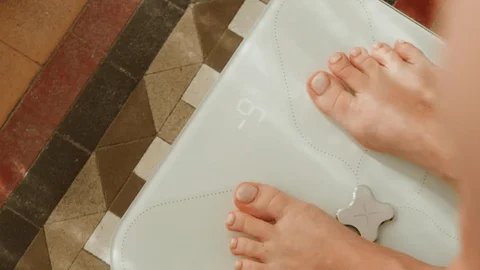
I remember my first body composition test. I was twenty-two, a graduate student in kinesiology at the University of Oregon, and I had just volunteered for a research study that included underwater weighing. I sat in a metal chair submerged in a tank of warm water, blew out all my air, and tried not to panic while a graduate assistant knocked on the tank to signal me to stay still. The result: 24.3% body fat. I had no idea if that was good or bad. I did not know what underwater weighing measured. I did not know how it compared to other methods. I just had a number and a vague sense that I should probably do something about it.
That is how most beginners feel. Overwhelmed. Confused. Bombarded by conflicting information about scales, calipers, DEXA scans, and smartphone apps. The fitness industry has made body composition testing seem like an advanced science accessible only to professionals with expensive equipment. It is not. The basics are simple, the tools are accessible, and the most important thing a beginner can do is start with something — anything — and build from there.
The first question is not "what is the most accurate method?" The first question is "what do I want to know?" If you want a general sense of whether your body fat is in a healthy range, a tape measure and the Navy method are enough. If you want to track trends over time as you start exercising, a home BIA scale under consistent conditions is fine. If you want a detailed baseline before beginning a serious training program, save up for a DEXA scan. The method should match the goal, not the other way around.
📊
Body Fat Percentage Estimator
Estimate your body fat percentage using the Navy method, YMCA method, or 3-site/7-site skinfold Jackson-Pollock equations. Free. Private. No data leaves your browser.
All data stays in your browser — we never see it.
For absolute beginners — people who have never measured body composition and do not want to spend money — I recommend starting with three free tools. First, measure your waist at the navel and calculate your waist-to-height ratio. If it is below 0.5, you are in a low-risk zone. If it is above 0.6, you need to pay attention. Second, use our free Body Fat Percentage Estimator with the Navy method. It requires only a tape measure and gives you a reasonable starting estimate. Third, take progress photos — front, side, and back — in consistent lighting and clothing. Save them. Do not look at them for four weeks. Then compare.
These three tools cost nothing. They require no appointments. They produce no radiation. And they give you more actionable information than most consumer gadgets. The waist measurement tells you about visceral fat and metabolic risk. The Navy estimate gives you a body fat percentage to work with. The photos give you visual feedback that numbers cannot provide. Together, they form a beginner's body composition toolkit that is more than enough for the first six months of any fitness journey.
📊
Bioelectrical Impedance Guide
Understand how BIA works, what affects accuracy, and how to get the most consistent readings. Hydration, electrode placement, consumer vs professional devices.
All data stays in your browser — we never see it.
If you are ready to spend a little money, the next step is a pair of skinfold calipers. The Slimguide at around forty-five dollars is the best entry-level option. Learn the 3-site or 7-site Jackson-Pollock protocol, practice on yourself or a friend, and track your measurements monthly. Skinfold testing has a learning curve — expect your first few attempts to be inconsistent — but with practice, it becomes a reliable tool. The key is consistency. Same sites, same pressure, same time of day, same hydration state. Our Skinfold Measurement Tracker can help you log measurements and see trends over time.
Here is the beginner progression I recommend:
| Stage | Timeline | Tools | Cost | What You Learn |
|---|
| Stage 1: Awareness | Month 1 | Waist, Navy method, photos | Free | Starting point and risk |
| Stage 2: Tracking | Months 2-3 | Add skinfold calipers | $45 | Trend direction |
| Stage 3: Precision | Month 6 | DEXA scan | $75-$150 | Accurate baseline |
| Stage 4: Monitoring | Ongoing | DEXA every 6-12 months | $75-$150/scan | Long-term changes |
📊
Skinfold Measurement Tracker
Log your skinfold measurements over time. Site selection guide, mm trend chart, and technician error warnings. All data stored locally.
All data stays in your browser — we never see it.
The DEXA scan at month six is the milestone. By then, you have established habits, you have trend data from your free tools, and you are ready for a professional assessment that tells you exactly where you stand. The DEXA gives you bone density, visceral fat area, regional lean mass, and a body fat percentage accurate to within plus or minus 1% to 2%. It is the anchor that makes all your other data meaningful. Without it, you are navigating by guesswork. With it, you have a map.
I also want to address the psychological side of starting body composition testing. Many beginners — especially women — approach their first test with anxiety. They are afraid of the number. They are afraid of judgment. They are afraid that knowing their body fat will make them feel worse about themselves. I felt that way at twenty-two. I still see it in every first-time client who walks through our door.
Here is what I tell them: the number is not a verdict. It is a starting point. You cannot change what you do not measure. And the only way to know whether your efforts are working is to track your progress objectively. The mirror lies. The scale lies. Your memory of what you looked like six months ago is unreliable. Data is honest. Data is kind, because it shows change even when the mirror does not. A client who has lost three pounds of fat and gained two pounds of muscle might see no change in the mirror. But the DEXA sees it. The calipers see it. The tape measure sees it. The data gives you credit for work that your eyes discount.
What is the cheapest way to measure body fat accurately?
The Navy method with a tape measure is free and reasonably accurate (plus or minus 3% to 4% vs DEXA). For trend tracking, it is more consistent than consumer BIA scales. Progress photos add visual context at no cost.
Should beginners get a DEXA scan right away?
Not necessarily. Start with free tools for the first month to establish habits and baseline trends. Get a DEXA at month three to six, when you are ready for a detailed assessment and have enough context to interpret the results meaningfully.
How do I know if my home measurements are accurate?
Consistency matters more than absolute accuracy. Use the same method, same time, same conditions every time. Compare your home estimate to a DEXA once to calibrate your expectations, then track trends. The direction of change is usually correct even if the absolute number is off.
What if my first body fat number scares me?
Use it as information, not judgment. Every number is changeable with consistent effort. The goal of testing is not to feel bad. It is to establish a baseline so you can measure progress. The only number that matters is the next one.
Can I track body composition without any equipment?
Yes. Waist circumference, progress photos, and how your clothes fit provide meaningful feedback. Our free Navy method estimator requires only a tape measure. Equipment improves precision, but it is not required to start.
I left that underwater weighing tank at twenty-two with a number I did not understand and a curiosity that never went away. That curiosity led me to perform three thousand assessments, to build these tools, and to write these articles. Your first test is not the end of the journey. It is the beginning. Start simple. Start cheap. Start now.
Your body is waiting to be understood.
— Emily Clarke